

American Cars vs Japanese Cars: Which One Is Better for Reliability, Cost, and Performance?

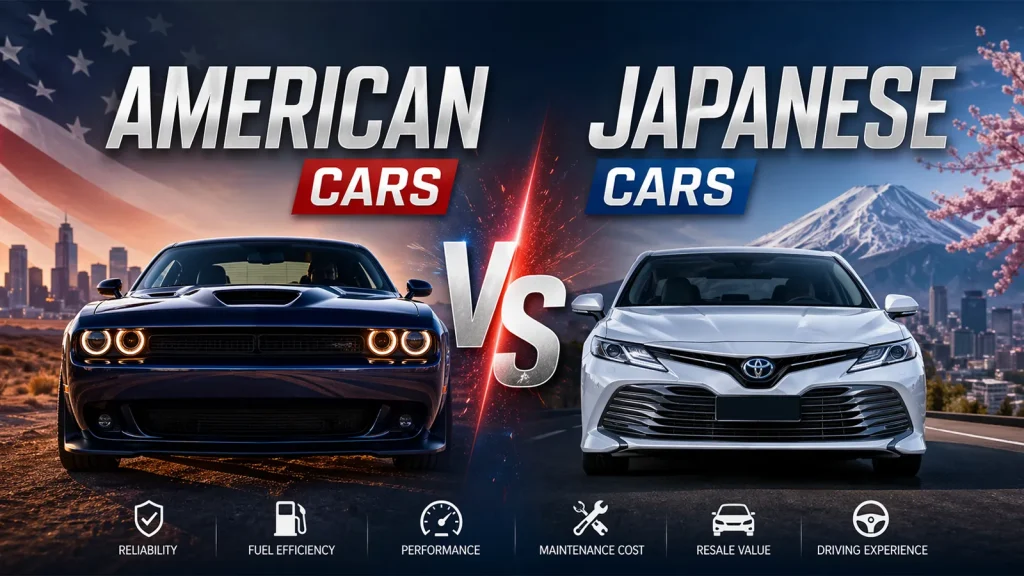
It is not always easy to choose the American or Japanese cars. Both are powerful options, but they are constructed with different priorities. Some focus on power and size, while others focus on reliability and efficiency. This choice is even more evident when you consider actual performance, not only specifications.It is easier to see the difference when you divide it into major areas. Reliability, cost, and performance demonstrate the way these cars are manufactured and the way they work in real life.

1) Reliability – What the Data Shows

One of the largest differences between the two categories is reliability.

The Japanese brands such as Toyota and Honda, are always on the first position in reliability surveys. As an illustration, the Toyota Camry has been on the top three most reliable midsize sedans in Consumer Reports in more than ten years. On the contrary, such models as Chevrolet Malibu were canceled because of the drop in demand and reliability.

The other example is the Honda Civic and Ford Focus. The Civic has remained very strong in reliability surveys and the Focus had significant transmission problems and was eventually scrapped in North America.

These differences come from design philosophy. The Japanese used cars are simpler and more consistent in engineering and this minimizes the problems of the car in the long run. 

2) Cost Comparison – What You Actually Spend

Cost is not just about buying the car. It includes maintenance, fuel, and resale value.


Purchase Price

Japanese cars lead the market in sedans. A 2024 Toyota Camry costs approximately $27,315, and a Honda Accord costs almost $28,895. There are numerous American brands that have left this segment altogether.

American vehicles such as the Ford Escape may be started a bit cheaper than Japanese vehicles such as the Toyota RAV4 or Honda CR-V in SUVs. 


Maintenance Cost

Maintenance is where the difference becomes clear.

  • Toyota owners pay around $441 per year
  • Honda owners pay around $428 per year
  • Ford owners average $775 per year
  • Chevrolet owners average $649 per year

This makes Japanese cars significantly cheaper to maintain over time.


Resale Value

Japanese cars hold value better.

  • Toyota Tacoma retains about 67% of its value after 5 years
  • Ford F-150 retains about 57%
  • Chevrolet Silverado retains around 52%

This makes Japanese vehicles a better long-term investment.

3) Performance – Power vs Real-World Driving

Performance is where the difference becomes more visible.


American Cars – Built for Power

American brands like Ford, Dodge, and Chevrolet focus on engine strength and size.

  • The 2024 Ford F-150 produces up to 430 horsepower and 570 lb-ft torque
  • It offers a maximum towing capacity of 14,000 lbs

This makes American vehicles ideal for:

  • Heavy-duty use
  • Highway performance
  • Large SUVs and trucks

However, this power often comes with higher fuel consumption and lower efficiency.


Japanese Cars – Built for Balance

Japanese brands emphasize on controlled and efficient performance.

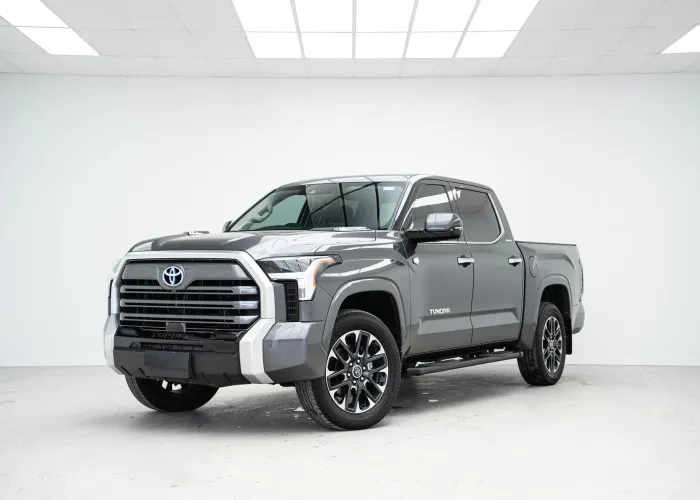
  • The Toyota Tundra Hybrid generates 437 horsepower, which is near the American rivals.
  • It is concerned with efficient power delivery and smoothness and not with aggressive acceleration.

In smaller segments:

  • Honda Civic and Toyota Corolla are leading because of their superior handling and performance.
  • Mazda3 and Subaru WRX concentrate on balance in driving. 


Real-World Driving Difference

American cars feel stronger in straight-line acceleration.
Japanese cars feel easier to control in everyday driving.

This is why:

  • American cars dominate trucks and muscle segments
  • Japanese cars dominate daily-use and compact segments

4) Fuel Efficiency and Environmental Performance

Fuel economy is another key difference.

  • Honda Civic delivers around 31 city / 40 highway MPG
  • Toyota Corolla delivers around 31/38 MPG

In SUVs:

  • Toyota RAV4 Hybrid reaches 41/38 MPG
  • Honda CR-V Hybrid reaches 43/36 MPG

American brands are improving, especially with hybrid and electric models like the Ford F-150 Lightning and Chevrolet EV lineup.

Japanese brands still lead in hybrid technology, with Toyota alone selling over 21 million hybrid vehicles globally.

5) Design and Driving Feel

American cars focus on size and bold design.

  • Larger body sizes
  • Strong road presence
  • Focus on power and visibility

Japanese cars focus on efficiency and usability.

  • Compact designs
  • Easier handling in traffic
  • Smooth driving experience

This difference becomes clear in daily driving conditions.

Which Is Better for Daily Use

Japanese automobiles are more efficient to use. They are more fuel efficient, cheaper to maintain and more reliable. This makes them good commuters and long term ownership. 


Import Japanese Cars From Japan If:

  • You want a reliable car for everyday driving
  • You prefer lower fuel and maintenance costs
  • You need a car that lasts longer with fewer issues
  • You drive regularly in city traffic or mixed conditions

The American cars are more equipped towards particular requirements like heavy-duty usage, towing or performance driving. 


Import American Cars From Japan If:

  • You want strong engine performance and power
  • You need a vehicle for towing or heavy-duty use
  • You prefer larger SUVs or trucks
  • You value road presence and aggressive styling

American vs Japanese Cars – Detailed Comparison

Factor

American Cars

Japanese Cars

Reliability

Moderate reliability, more variation across models

Consistently high reliability across brands like Toyota and Honda

Fuel Efficiency

Lower due to larger engines and heavier vehicles

Higher due to smaller engines and efficiency-focused design

Maintenance Cost

Higher yearly cost (approx. $650–$800+)

Lower yearly cost (approx. $400–$600)

Performance

Strong power, higher horsepower, built for speed and towing

Balanced performance, smoother and more controlled driving

Resale Value

Moderate resale, depends on model and demand

Strong resale value, especially Toyota and Honda models

Vehicle Size

Larger cars, SUVs, and trucks dominate

More compact and mid-size options for daily use

Driving Experience

Aggressive, powerful, highway-focused

Smooth, stable, and easy for city driving

Best Use Case

Performance, towing, long highways

Daily driving, commuting, long-term ownership

The American cars are power oriented, size oriented, and performance, particularly in the trucks and muscle cars. The cars in Japan are more practical in everyday driving as they are oriented to reliability, efficiency, and long-term usage.

Which One Should You Choose?

Depending on the way you intend to utilize the car, the right choice will be made. Japanese brands such as Toyota, Honda, and Nissan are more reliable, efficient in fuel and day to day driving. Ford, Dodge, and Chevrolet are American brands that are more powerful, fast and commanding on the road.


At SBK Global Auto Trading, both American and Japanese vehicles can be sourced with verified condition and proper documentation. This simplifies the process of making a choice based on accurate information.


Both are valuable, and it will be easier to decide which one to choose when you consider your needs, budget, and long-term use.

Frequently Asked Questions - FAQs

1) Which is more reliable: American or Japanese cars?

Japanese cars are generally more reliable, with brands like Toyota and Lexus consistently ranking highest in Consumer Reports reliability studies.


2) Do American cars have higher maintenance costs?

Maintenance costs vary, but many American brands like Ford and Chevrolet tend to cost more over time due to higher repair frequency and complexity.


3) Why are Japanese cars more fuel-efficient?

Japanese cars are more fuel-efficient because they use smaller engines, lighter designs, and lead hybrid innovation, with brands like Toyota dominating global hybrid technology.


4) Is importing cars from Japan a good idea?

Importing cars from Japan is a strong option because strict inspection systems and early resale cycles mean many exported vehicles are well-maintained and in better condition.


5) Which cars usually last longer?

Japanese cars typically last longer due to durable engineering and fewer mechanical issues, with many models maintaining reliability well beyond average ownership periods when properly maintained.


It is not always easy to choose the American or Japanese cars. Both are powerful options, but they are constructed with different priorities. Some focus on power and size, while others focus on reliability and efficiency. This choice is even more evident when you consider actual performance, not only specifications.It is easier to see the difference when you divide it into major areas. Reliability, cost, and performance demonstrate the way these cars are manufactured and the way they work in real life.


1) Reliability – What the Data Shows


One of the largest differences between the two categories is reliability.

The Japanese brands such as Toyota and Honda, are always on the first position in reliability surveys. As an illustration, the Toyota Camry has been on the top three most reliable midsize sedans in Consumer Reports in more than ten years. On the contrary, such models as Chevrolet Malibu were canceled because of the drop in demand and reliability.

The other example is the Honda Civic and Ford Focus. The Civic has remained very strong in reliability surveys and the Focus had significant transmission problems and was eventually scrapped in North America.

These differences come from design philosophy. The Japanese used cars are simpler and more consistent in engineering and this minimizes the problems of the car in the long run. 


2) Cost Comparison – What You Actually Spend

Cost is not just about buying the car. It includes maintenance, fuel, and resale value.


Purchase Price

Japanese cars lead the market in sedans. A 2024 Toyota Camry costs approximately $27,315, and a Honda Accord costs almost $28,895. There are numerous American brands that have left this segment altogether.

American vehicles such as the Ford Escape may be started a bit cheaper than Japanese vehicles such as the Toyota RAV4 or Honda CR-V in SUVs. 


Maintenance Cost

Maintenance is where the difference becomes clear.

    • Toyota owners pay around $441 per year

    • Honda owners pay around $428 per year

    • Ford owners average $775 per year

    • Chevrolet owners average $649 per year

This makes Japanese cars significantly cheaper to maintain over time.


Resale Value

Japanese cars hold value better.

    • Toyota Tacoma retains about 67% of its value after 5 years

    • Ford F-150 retains about 57%

    • Chevrolet Silverado retains around 52%

This makes Japanese vehicles a better long-term investment.


3) Performance – Power vs Real-World Driving

Performance is where the difference becomes more visible.


American Cars – Built for Power

American brands like Ford, Dodge, and Chevrolet focus on engine strength and size.

    • The 2024 Ford F-150 produces up to 430 horsepower and 570 lb-ft torque

    • It offers a maximum towing capacity of 14,000 lbs

This makes American vehicles ideal for:

    • Heavy-duty use

    • Highway performance

    • Large SUVs and trucks

However, this power often comes with higher fuel consumption and lower efficiency.


Japanese Cars – Built for Balance

Japanese brands emphasize on controlled and efficient performance.

    • The Toyota Tundra Hybrid generates 437 horsepower, which is near the American rivals.

    • It is concerned with efficient power delivery and smoothness and not with aggressive acceleration.

In smaller segments:

    • Honda Civic and Toyota Corolla are leading because of their superior handling and performance.

    • Mazda3 and Subaru WRX concentrate on balance in driving. 

Real-World Driving Difference

American cars feel stronger in straight-line acceleration.
Japanese cars feel easier to control in everyday driving.

This is why:

    • American cars dominate trucks and muscle segments

    • Japanese cars dominate daily-use and compact segments

4) Fuel Efficiency and Environmental Performance

Fuel economy is another key difference.

    • Honda Civic delivers around 31 city / 40 highway MPG

    • Toyota Corolla delivers around 31/38 MPG

In SUVs:

    • Toyota RAV4 Hybrid reaches 41/38 MPG

    • Honda CR-V Hybrid reaches 43/36 MPG

American brands are improving, especially with hybrid and electric models like the Ford F-150 Lightning and Chevrolet EV lineup.

Japanese brands still lead in hybrid technology, with Toyota alone selling over 21 million hybrid vehicles globally.


5) Design and Driving Feel


American cars focus on size and bold design.

    • Larger body sizes

    • Strong road presence

    • Focus on power and visibility

Japanese cars focus on efficiency and usability.

    • Compact designs

    • Easier handling in traffic

    • Smooth driving experience

This difference becomes clear in daily driving conditions.


Which Is Better for Daily Use

Japanese automobiles are more efficient to use. They are more fuel efficient, cheaper to maintain and more reliable. This makes them good commuters and long term ownership. 


Import Japanese Cars From Japan If:

    • You want a reliable car for everyday driving

    • You prefer lower fuel and maintenance costs

    • You need a car that lasts longer with fewer issues

    • You drive regularly in city traffic or mixed conditions

The American cars are more equipped towards particular requirements like heavy-duty usage, towing or performance driving. 


Import American Cars From Japan If:

    • You want strong engine performance and power

    • You need a vehicle for towing or heavy-duty use

    • You prefer larger SUVs or trucks

    • You value road presence and aggressive styling

American vs Japanese Cars – Detailed Comparison


Factor American Cars Japanese Cars
Reliability Moderate reliability, more variation across models Consistently high reliability across brands like Toyota and Honda
Fuel Efficiency Lower due to larger engines and heavier vehicles Higher due to smaller engines and efficiency-focused design
Maintenance Cost Higher yearly cost (approx. $650–$800+) Lower yearly cost (approx. $400–$600)
Performance Strong power, higher horsepower, built for speed and towing Balanced performance, smoother and more controlled driving
Resale Value Moderate resale, depends on model and demand Strong resale value, especially Toyota and Honda models
Vehicle Size Larger cars, SUVs, and trucks dominate More compact and mid-size options for daily use
Driving Experience Aggressive, powerful, highway-focused Smooth, stable, and easy for city driving
Best Use Case Performance, towing, long highways Daily driving, commuting, long-term ownership

The American cars are power oriented, size oriented, and performance, particularly in the trucks and muscle cars. The cars in Japan are more practical in everyday driving as they are oriented to reliability, efficiency, and long-term usage. 


Which One Should You Choose?

Depending on the way you intend to utilize the car, the right choice will be made. Japanese brands such as Toyota, Honda, and Nissan are more reliable, efficient in fuel and day to day driving. Ford, Dodge, and Chevrolet are American brands that are more powerful, fast and commanding on the road.

At SBK Global Auto Trading, both American and Japanese vehicles can be sourced with verified condition and proper documentation. This simplifies the process of making a choice based on accurate information.

Both are valuable, and it will be easier to decide which one to choose when you consider your needs, budget, and long-term use. 


Frequently Asked Questions – FAQs


1) Which is more reliable: American or Japanese cars?

Japanese cars are generally more reliable, with brands like Toyota and Lexus consistently ranking highest in Consumer Reports reliability studies.


2) Do American cars have higher maintenance costs?

Maintenance costs vary, but many American brands like Ford and Chevrolet tend to cost more over time due to higher repair frequency and complexity.


3) Why are Japanese cars more fuel-efficient?

Japanese cars are more fuel-efficient because they use smaller engines, lighter designs, and lead hybrid innovation, with brands like Toyota dominating global hybrid technology.


4) Is importing cars from Japan a good idea?

Importing cars from Japan is a strong option because strict inspection systems and early resale cycles mean many exported vehicles are well-maintained and in better condition.


5) Which cars usually last longer?

Japanese cars typically last longer due to durable engineering and fewer mechanical issues, with many models maintaining reliability well beyond average ownership periods when properly maintained.

Add comment

Your email address will not be published. Required fields are marked *